The JournalTravel
Jabalpur as a Gateway: Bargi Lake, Kanha & Bandhavgarh
Most people who look up Jabalpur stop at the Marble Rocks. That is a mistake worth correcting, because the city is really a doorway. Sit here for a few days and central India opens up in every direction: a lake wide enough to lose the far shore, two of the country's best-known tiger reserves within a morning's drive, and a marble gorge close enough to see before lunch.
What's near Jabalpur: the short answer
The best places to visit near Jabalpur split into three easy tiers. Within an hour, you have Bhedaghat and the Marble Rocks (about 25 km) and Bargi Lake (about 40 km), both comfortable half-day or day trips. Within a morning's drive sit the tiger reserves: Kanha National Park is roughly 165 km away, about a four-hour drive via Mandla, and Bandhavgarh National Park is about 190 km, generally four to five hours via Umaria. Jabalpur's airport and railway junction make it the natural arrival point for all of it, which is why so many central-India trips begin and end in the city rather than treating it as a stop to rush through.
Distances below are drawn from current mapping and travel sources and vary a little by route; use them to plan, and check live road conditions on the day.
Why Jabalpur is a natural base for central Madhya Pradesh
Central India is spread out. The distances that make it feel remote are exactly why a good base matters: you want somewhere you can leave from early, come back to late, and not have to repack every night. Jabalpur earns that role on logistics alone.
Dumna Airport connects the city by air, and Jabalpur Junction is one of the busier railheads in the region, so guests arriving from Delhi, Mumbai, Bengaluru, Hyderabad or Indore can be on the ground and settled the same day. From here the road network fans out toward the reserves and the Narmada. A single well-placed hotel means one set of bags, one kitchen you trust, and one bed to return to after a long day in a jeep, which, on a wildlife trip, counts for more than it sounds.
Day trips and short escapes
Bargi Dam and Bargi Lake
About 40 km from the city, Bargi Dam is the easiest escape on this list. The reservoir behind the dam stretches for kilometres along the Narmada, and Madhya Pradesh Tourism has run boating on it: cruise rides, speedboats, water scooters and paddle boats. One note before you plan a day around the water: MP Tourism's cruise operations have been suspended since a cruise boat capsized on the reservoir on 30 April 2026, so check the current status of boating at Bargi before you set out. The lakeside itself still rewards a late afternoon: the water flattens, the light softens over the low hills, and the crowd thins out. It is a half-day outing, not an overnight one, which makes it a good gentle first day if guests have arrived tired. Timings and boat charges change with the season, so confirm them locally before you commit to a plan.
Bhedaghat and the Marble Rocks
The gorge is the reason most visitors come to Jabalpur in the first place, and it deserves its reputation: hundred-foot marble cliffs rising straight from the Narmada, best seen from a rowing boat that glides between them. Dhuandhar Falls, where the river narrows and throws up a permanent mist, is a short distance on. It is close enough to fold into a single unhurried day. We cover it properly in our 2-day Jabalpur itinerary, and the city's own ghats, temples and lakes are mapped in our guide to places to visit in Jabalpur, so we will not repeat the details here; think of Bhedaghat as the day you take before or after the longer drives to the parks.
Gateway to the tiger reserves
This is where Jabalpur genuinely earns "gateway." Two of India's most storied tiger habitats are within reach, and both are far more pleasant to attempt from a proper base than from a rushed same-day arrival.
Kanha National Park: distance and when to go
Kanha, the sal-forest and grassland reserve often credited as an inspiration for The Jungle Book, lies roughly 165 km from Jabalpur, usually about four hours by road via Mandla, though estimates vary by source and route. One thing to settle before you drive: Kanha has entry gates on different sides of the reserve (Khatia and Mukki among them), and the gate your safari is booked from decides your route and how early you need to leave. Confirm it when you book your permit, not on the morning of.
Bandhavgarh National Park: distance and when to go
Bandhavgarh, famous for one of the higher tiger densities in the country, is a little further, about 190 km from Jabalpur, generally a four-to-five-hour drive toward Umaria and Tala. The extra distance is easily managed if you leave Jabalpur in the morning and arrive with daylight to spare, ready for the next day's early safari.
Safari season, briefly
Both reserves broadly run their safari season from around 15 October to 30 June, closing the core zones through the monsoon (July to September) while the forest recovers. October to March gives you the most comfortable weather; the hotter March-to-May stretch is harder on the body but tends to reward patience, as animals gather near shrinking waterholes. Safari permits are limited and sell out, so book them well ahead of your dates.
| Destination | Approx. distance from Jabalpur | Typical drive | Good for |
|---|---|---|---|
| Bhedaghat / Marble Rocks | ~25 km | ~45 min | Half-day: boat ride, Dhuandhar Falls |
| Bargi Dam / Bargi Lake | ~40 km | ~1 hr | Half-day: boating, sunset on the Narmada |
| Kanha National Park | ~165 km | ~4 hrs | Overnight: tiger safari (Oct to Jun) |
| Bandhavgarh National Park | ~190 km | ~4 to 5 hrs | Overnight: tiger safari (Oct to Jun) |
Distances are planning estimates from current travel sources and vary by route; confirm on the day.
Building an itinerary around your stay
The trips above are different lengths, which is a gift when you are planning. A workable rhythm for four or five days looks like this. Arrive and settle. Give the first full day to Bhedaghat and the Marble Rocks, close and gentle. Take a half-day at Bargi if you want water and quiet. Then commit two nights to one reserve, Kanha or Bandhavgarh, rather than both, so you get two safaris and are not spending your holiday in the car. Come back to the city to unwind before you fly or train out.
That last part is the point of a base. After a 4 a.m. start and a dusty afternoon in a jeep, what you want is a hot shower, a proper vegetarian meal that isn't a compromise, and somewhere to sit still.
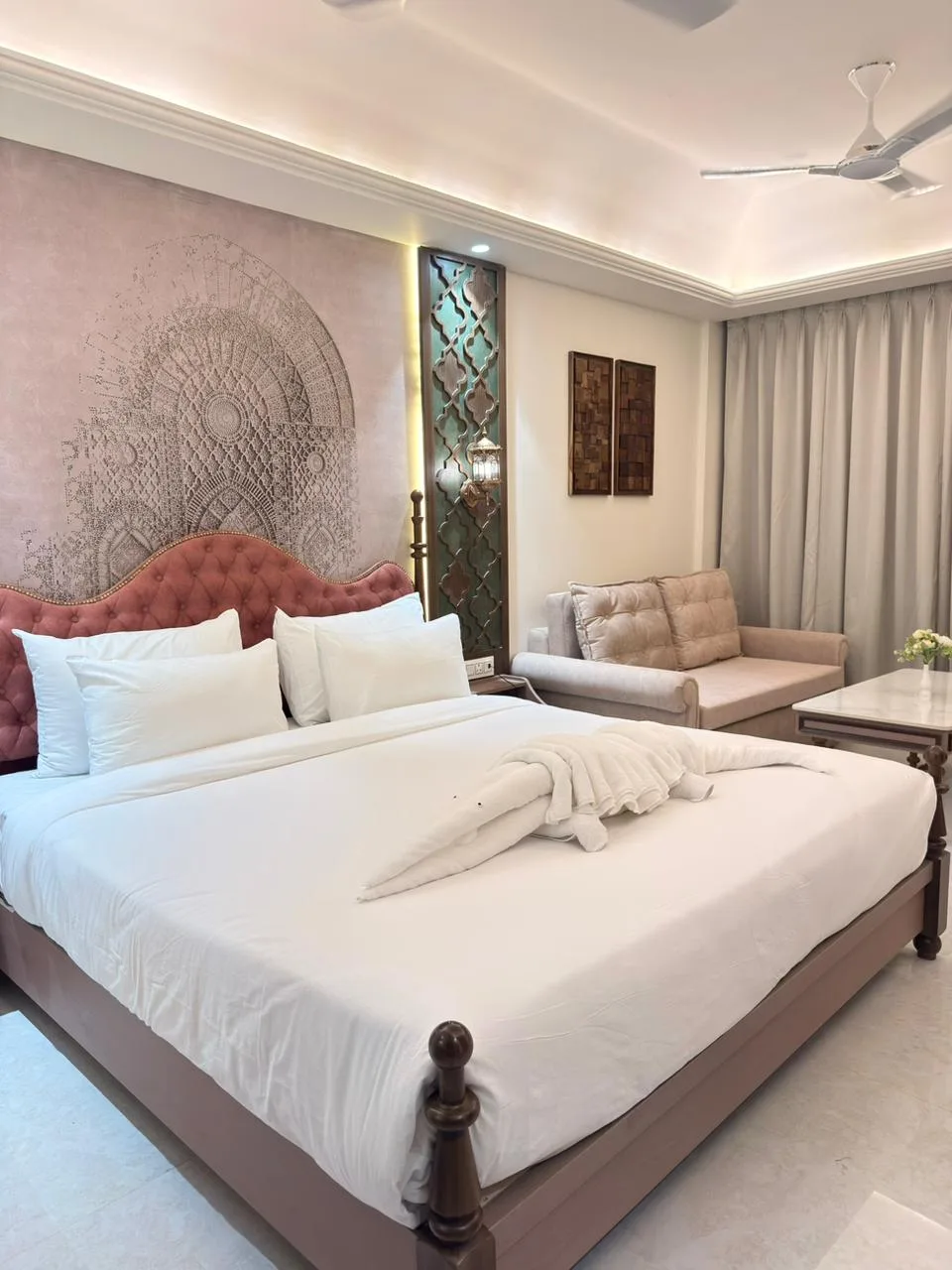
Our rooftop infinity pool is a good place to let the day settle, and Kasturi, our pure-vegetarian restaurant, means dinner is one less thing to plan. With 90 rooms and suites across the property, we can also hold a block for larger groups travelling together, useful when a family or a photography group is coordinating early safari starts. If you are still deciding where to base yourself, our guide on where to stay in Jabalpur weighs up the areas and room options in more detail.
FAQ
Asked at the desk
How far is Kanha National Park from Jabalpur? Kanha is roughly 165 km from Jabalpur by road, usually a four-hour drive via Mandla. Because Kanha's Khatia and Mukki gates sit on opposite sides of the reserve, confirm which gate your safari is booked from before you set out, as it changes the route and the timing. Distances vary by source and route; treat these as planning figures and check live conditions on the day.
How far is Bandhavgarh National Park from Jabalpur? Bandhavgarh is about 190 km from Jabalpur, generally a four-to-five-hour drive toward Umaria and Tala. As with any long central-India drive, leave early so you reach in daylight and can settle before the next morning's safari.
Is Jabalpur a good base for a tiger-safari trip? Yes. Jabalpur has an airport (Dumna) and a major railway junction, so it is one of the easiest arrival points for central Madhya Pradesh. Many travellers fly or train in, spend a night in the city, see Bhedaghat and the Marble Rocks, then drive out to Kanha or Bandhavgarh, and return to the same comfortable base afterwards.
What can you do at Bargi Lake? Bargi Dam, around 40 km from Jabalpur on the Narmada, is a half-day escape rather than an overnight one. Madhya Pradesh Tourism has run boating on the reservoir (cruise rides, speedboats, water scooters and paddle boats), though its cruise operations have been suspended since a cruise boat capsized there on 30 April 2026, so check the current status before you go. The wide water and low hills still make it a quiet spot for a sunset. Confirm current timings and boat charges locally.
When are Kanha and Bandhavgarh open for safaris? Both reserves broadly run their safari season from around 15 October to 30 June and close their core zones through the monsoon (July to September). October to March is the pleasant-weather window; March to May is hotter but often rewards patient visitors with better sightings around waterholes. Book safari permits well ahead.