The JournalTravel
Places to Visit in Jabalpur: A Local Guide by Route
The best places to visit in Jabalpur fall into four routes: Bhedaghat's Marble Rocks and Dhuandhar Falls on the Narmada, Madan Mahal hill with the Balancing Rock and the Rani Durgavati Museum, the Narmada ghats at Gwarighat and Tilwara, and the city's lakes and temples. Two days covers the highlights comfortably.
Most lists of Jabalpur tourist places hand you twenty names in no particular order. One entry measures its distance from the city centre, the next from the bus stand, most from nowhere, and nothing tells you which stops share a road. Two of the pages that rank highest also recommend the monsoon, which is the one season the boats at Bhedaghat do not run. So this guide is built the way we build sightseeing days for guests at the desk: every sight grouped by route, every distance taken from a single point (Jabalpur Junction railway station), and each stop given the time we would set aside for it. Fees and opening hours are left out wherever published sources disagree, which at Bhedaghat is most of the time. The counters set their own rates, and the only reliable number is the one posted on the day.
Jabalpur sightseeing at a glance
| Place | Route | Road km from Jabalpur Junction | Time to allow | Best time of day |
|---|---|---|---|---|
| Marble Rocks boat ride | 1. Bhedaghat | about 22 | 1 to 1.5 hours | Morning or late afternoon |
| Dhuandhar Falls and ropeway | 1. Bhedaghat | about 24 | 1 to 1.5 hours | Morning |
| Chausath Yogini Temple | 1. Bhedaghat | about 22 | 45 minutes | Morning, before the heat |
| Marble craft stalls | 1. Bhedaghat | about 22 | 20 to 30 minutes | Any time |
| Madan Mahal Fort | 2. Madan Mahal hill | about 5 (to the locality) | 1 to 1.5 hours | Early morning |
| Balancing Rock | 2. Madan Mahal hill | at the foot of the fort hill | 15 to 20 minutes | Morning |
| Rani Durgavati Museum | 2. Madan Mahal hill | about 4 | 1 to 1.5 hours | Late morning |
| Bhawartal Garden | 2. Madan Mahal hill | beside the museum | 30 to 45 minutes | Late afternoon |
| Gwarighat | 3. Narmada ghats | about 10 | 1 hour | Dusk, for the aarti |
| Tilwara Ghat | 3. Narmada ghats | check your map | 30 to 45 minutes | Afternoon |
| Hanumantal Bada Jain Mandir | 4. City | check your map | 45 minutes | Morning |
| Pisanhari ki Madiya | 4. City | check your map | 1 hour | Morning |
| Kachnar City Shiva statue | 4. City | check your map | 30 to 45 minutes | Dusk |
| Sangram Sagar and Bajnamath | 4. City | check your map | 45 minutes | Late afternoon |
| Dumna Nature Reserve | 4. City | about 10 from the city | 2 to 3 hours | Early morning |
Distances are approximate road figures from Jabalpur Junction, worked out in October 2026. Where we give no number, our routing source could not place the site precisely, so check your map app. Time to allow is our planning estimate, not an official figure.
What is Jabalpur famous for?
Jabalpur is famous first for the Marble Rocks at Bhedaghat, where the Narmada cuts a gorge through white marble and then drops at Dhuandhar Falls. Away from the river, two dynasties account for most of what you will visit: the Kalachuris of Tripuri, who built the Chausath Yogini Temple about a thousand years ago, and the Gond kings of Garha, remembered through Madan Mahal Fort and Rani Durgavati. The city hosted the 1939 Tripuri session of the Indian National Congress, where Subhas Chandra Bose was re-elected president, and it has been the principal seat of the Madhya Pradesh High Court since 1956. Its sweet is khoya jalebi, a Jabalpur speciality credited to Harprasad Badkul in 1889.
Route 1: Bhedaghat, the Marble Rocks and Dhuandhar Falls
About 22 km from the station, on the Narmada. Plan a half day at minimum, and a full day if you want the falls, the boat, the temple and lunch without watching the clock.
The Marble Rocks boat ride
This is why most visitors come to Jabalpur at all. Boats leave from Panchvati Ghat and carry you between white marble cliffs, some about 100 feet high, that close in on both sides of the river. The gorge went onto India's UNESCO World Heritage Tentative List in 2021 as "Bhedaghat-Lametaghat in Narmada Valley", which is why you will hear it called a heritage site. Strictly, it is a tentative listing, not an inscription. Moonlit boating on full-moon nights is a long-standing draw, and the gorge is a different place by moonlight; ask at the ghat whether night trips are running.
Two things to settle before you drive out. Boating is suspended through the monsoon and usually returns around mid-October, so check that it is running. And ask for a life jacket and wear it. Jackets are required at Bhedaghat, though local press reports have still found tourists riding without one. Fares are posted at the ghat. For the long version of this day, in the order we would do it, see our full Bhedaghat day plan.
Dhuandhar Falls and the ropeway
About 2 km from the boat ghat by road, the Narmada narrows and drops roughly 30 metres. The spray hangs over the fall like smoke, which is the name: dhuan, smoke, and dhar, flow. A ropeway crosses near the falls and gives the aerial view most people photograph. It is ticketed, runs in daylight and closes in the monsoon. When the river is in spate the administration also shuts the restricted zone at the falls, as it did in July 2026, so the platforms in other people's photos may be fenced off when you arrive in August.
Chausath Yogini Temple
A flight of 108 steps climbs a hill between the ghat and the falls to a circular, open-air temple about a thousand years old. The Kalachuri dynasty of Tripuri built it: an enclosure roughly 125 feet across, named for the 64 yoginis, with a Gauri-Shankar shrine added at its centre in 1155 CE. It is quieter than the river below and, in our view, the one stop on this route not to skip. Climb it early, before the stone heats up. Many of its finest sculptures now sit in the Rani Durgavati Museum, which is one reason Route 2 follows well the next day.
Marble craft stalls
The lanes around the ghat are lined with stalls selling small carvings and decorative pieces in local marble. Twenty minutes is plenty. Anything thin or delicate wants proper wrapping for the journey home.
Route 2: Madan Mahal hill, the Balancing Rock and Gond heritage
Inside the city, a few kilometres from the station. One morning covers all four stops if you start early.
Madan Mahal Fort
A compact hilltop fort from the Gond era, tied to Rani Durgavati, the queen who died fighting the Mughals and is remembered as a martyr. Do not expect a palace. What survives is a watch-post built into the rock: war rooms, a small reservoir, stables and a few chambers. The reward is the view across Jabalpur from the top. You will see the fort's founding put anywhere from the 11th to the 14th century depending on who is writing. The dates genuinely conflict, so we give you the Gond connection and not a year we cannot stand behind.
Balancing Rock
At Deotal, near the foot of Madan Mahal hill, a large boulder sits on a tiny point of another rock. It looks as though one push would send it over. It is a quick stop, usually taken on the way up to the fort, and it is better before the fort than after, while the light is soft and the crowds are thin.
Rani Durgavati Museum and Bhawartal Garden
The museum commemorates the Gond queen and holds sculptures, inscriptions and coins, including pieces brought down from the Chausath Yogini Temple. If you did Route 1 the day before, this is where the temple's story fills in. Hours and closing days differ between published sources, so confirm before you go. Bhawartal Garden lies beside the museum, which makes the pair an easy late-morning combination: an hour inside, then a walk in the garden before lunch.
Route 3: The Narmada ghats
Best at dusk. These two ghats are where the city meets the river for worship, and visitors are welcome to watch.
Gwarighat and the evening aarti
Gwarighat is Jabalpur's main Narmada ghat, with the Maa Narmada temple and a gurudwara on its banks. The river aarti is performed every evening, usually around 7 PM; confirm the time locally, as it shifts with the season. Arrive twenty minutes early for a place on the steps. On Narmada Jayanti the ghat holds a large maha aarti and the crowds swell with it, lovely to see and harder to move through.
Tilwara Ghat
Tilwara Ghat is remembered as one of the places where a share of Mahatma Gandhi's ashes was immersed in 1948, and it has a memorial and the Tilwadeshwar Mahadev temple. It is a quiet stop with no spectacle to it, and it pairs well with an afternoon on this side of the river.
Bhedaghat by day, Gwarighat by dusk
The question we hear most from guests with a single free day is whether Bhedaghat and the aarti fit together. They do, because of geography. Gwarighat sits on the Bhedaghat side of the city, about 10 km from the station against about 22 km for Bhedaghat, so it falls on the drive back rather than across town. Spend the morning and early afternoon on the gorge, the falls and the temple, start back in the late afternoon, and stop at the ghat in time for the aarti. If you are staying with us, Kasturi, our pure-vegetarian restaurant, serves until about 11 PM, so the aarti and a proper dinner fit in the same evening without rushing either.
Route 4: Lakes, temples and green spaces in the city
You will not do all of these. Pick two or three that match your interests and fold them around Route 2.
Hanumantal Bada Jain Mandir
A Digambar Jain temple on the edge of Hanumantal lake, originally built in 1686 CE, with 22 shrines inside. It is often described as the largest independent Jain temple in India.
Pisanhari ki Madiya
A cluster of Digambar Jain temples on a hill. Local legend says an elderly woman funded it by grinding grain, which is where the name comes from. The climb is part of the visit, so go in the cooler part of the morning.
Kachnar City Shiva statue
A 76-foot (23 m) statue of Shiva stands above a cavern holding replicas of the twelve Jyotirlinga shrines. There is a daily evening aarti, so dusk is the time to come, and on a city-only evening it is the alternative to Gwarighat.
Sangram Sagar and Bajnamath
Sangram Sagar is a lake associated with the Gond king Sangram Shah, who reigned roughly from 1488 to 1541, and the Bajnamath temple stands beside it. Together they make a quiet late-afternoon stop for anyone following the Gond story on from Madan Mahal.
Dumna Nature Reserve
About 10 km from the city, Dumna covers roughly 1,058 hectares and has chital, wild boar and a long bird list. Go early for the wildlife. One firm rule: bathing and swimming are prohibited because the water holds crocodiles.
When to visit Jabalpur, and a note on boating safety
Two of the pages that rank for Jabalpur sightseeing recommend July to September, when the falls look most dramatic. That is also exactly when the boats stop. The year, from a visitor's side:
| Season | What to expect | Bhedaghat boats |
|---|---|---|
| October to March | Mild days, clear light on the marble, the best all-round window | Usually running from around mid-October; confirm the date each season |
| April to June | Hot afternoons; plan sightseeing for early morning and dusk | Normally running |
| July to September | Falls at their loudest, river high and fast | Suspended; restricted zone at Dhuandhar and the ropeway may also close |
On safety: wear a life jacket on any boat at Bhedaghat, where it is required, and stay out of the water at Dumna. After a cruise boat capsized at Bargi on 30 April 2026, the state suspended reservoir cruises pending checks, so confirm the current status of any reservoir boating before you plan a day around it.
How many days do you need in Jabalpur?
With one day, do Route 1 in the morning and early afternoon and end at Gwarighat for the aarti. Tiring, but complete.
With two days, do Route 1 plus Gwarighat on the first, then Madan Mahal hill, the museum and two Route 4 stops on the second. Our two-day Jabalpur itinerary lays this out stop by stop.
With three days or more, add Bargi, or give two nights to Kanha or Bandhavgarh. Those trips sit outside the city, and our guide to places to visit near Jabalpur covers them.
One correction to make while you plan: a few popular lists include Vijayraghavgarh Fort and Mala Devi Temple as Jabalpur sights. Both are well outside the district and are not realistic day additions.
Where to base yourself
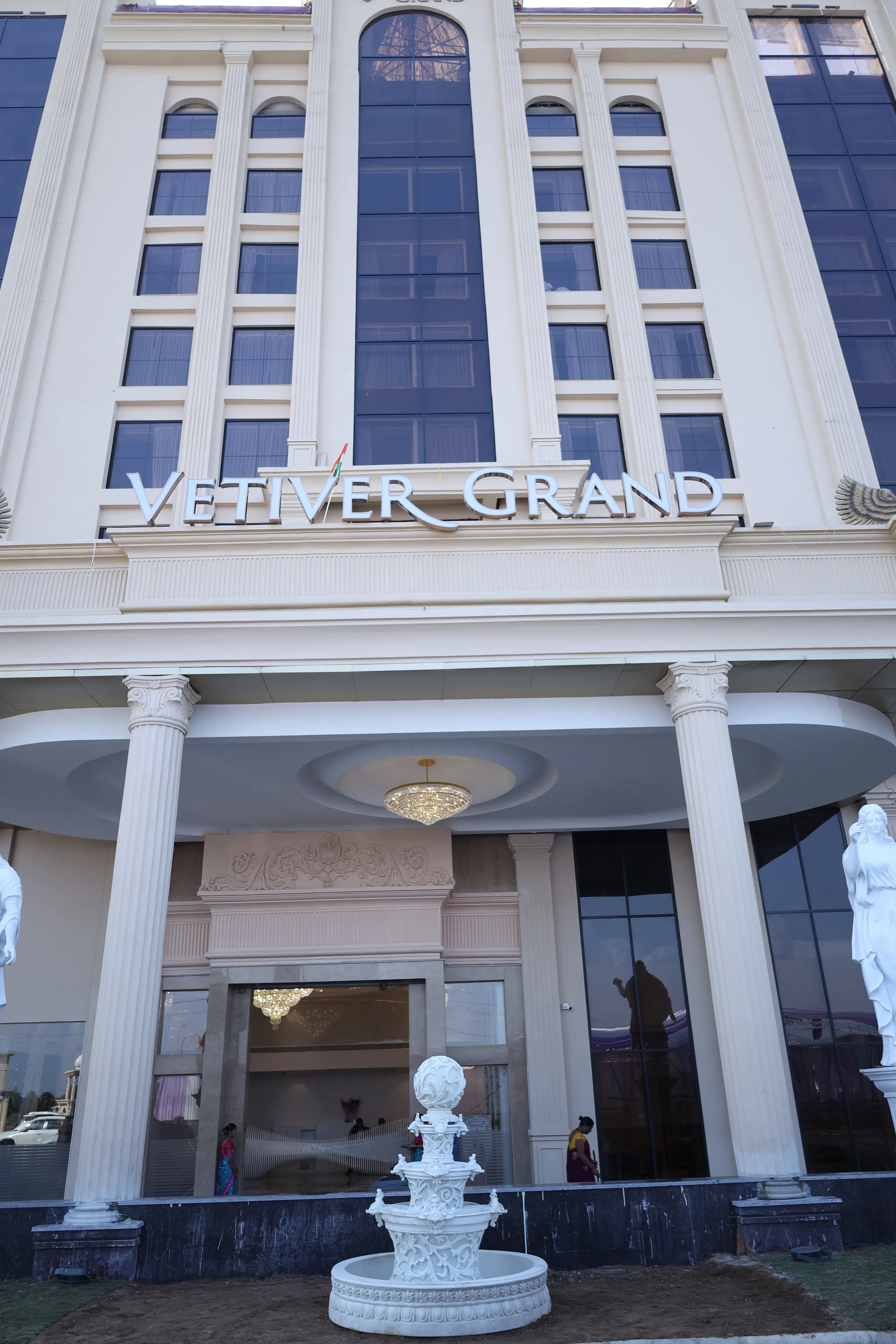
Four routes pull in four directions, so the simplest plan is one base you return to each night. Vetiver Grand sits on the quieter edge of Jabalpur, about 15 km from the city centre. You get space and quiet evenings. The trade-off, plainly, is that a sunrise boat at Bhedaghat means an early start.
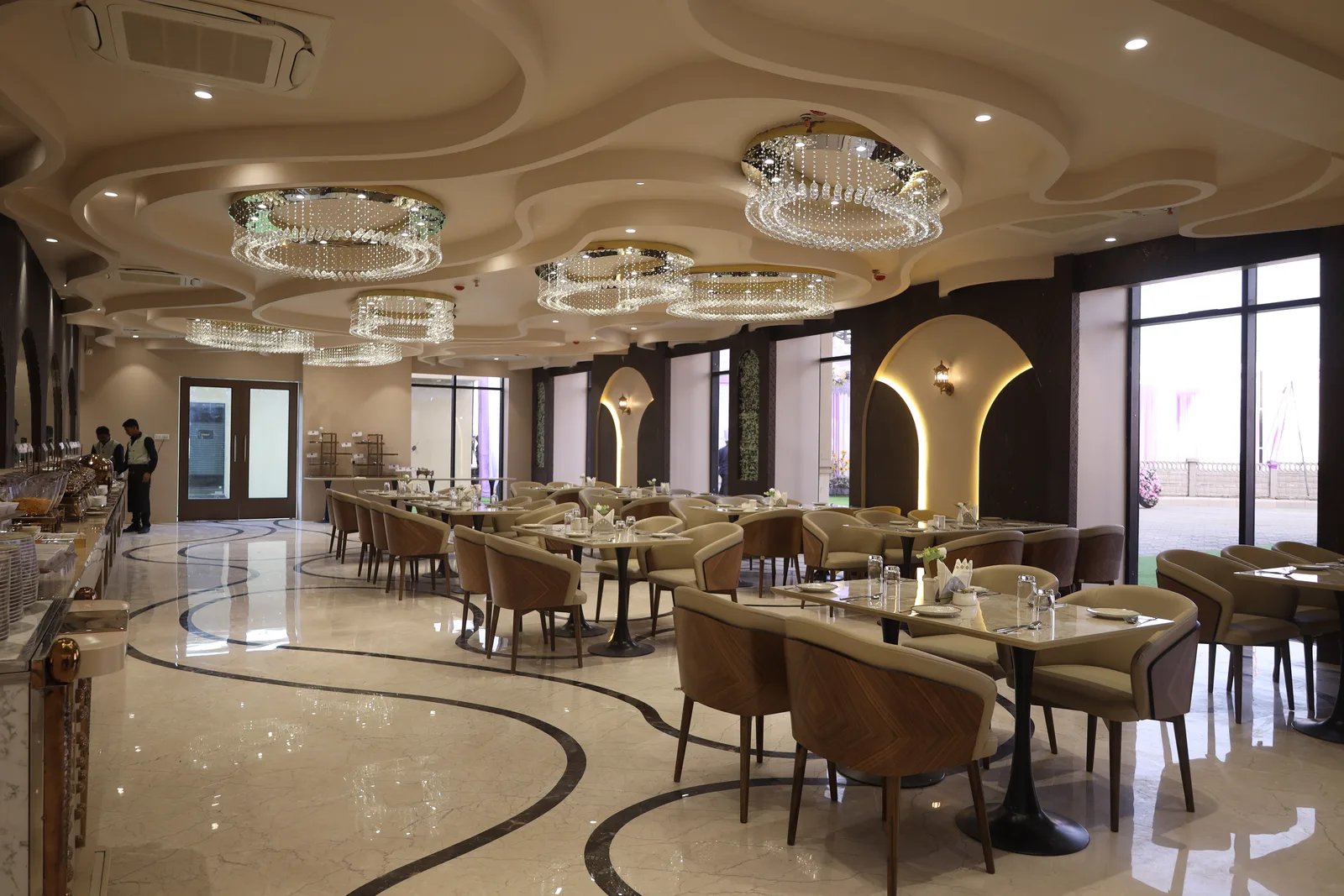
What guests want after a day like Route 1 is usually a long dinner and an early night, and the property is set up for that. Kasturi on the ground floor is fully pure-vegetarian and serves from about 7 AM to 11 PM; we have written it up in full. The rooftop infinity pool is available on request and listed as operational in winter, which is also the sightseeing season. There are 90 rooms and suites across nine floors, airport transfers can be arranged for a fee, and reception is staffed around the clock. For a wider look at the city's areas, read where to stay in Jabalpur, or browse our rooms and suites.
Planning your days around Jabalpur? Tell us which routes you have in mind and we will help you put them in order. Call us, message us on WhatsApp, book on MakeMyTrip or Goibibo, or plan your stay with our team.
FAQ
Asked at the desk
What is Jabalpur famous for? The Marble Rocks gorge at Bhedaghat, where the Narmada runs between white marble cliffs and drops at Dhuandhar Falls. The city also carries Kalachuri and Gond heritage (the Chausath Yogini Temple, Madan Mahal Fort), hosted the 1939 Tripuri Congress session, is the principal seat of the Madhya Pradesh High Court, and is known for khoya jalebi.
How many days are enough for Jabalpur? Two days covers the main sights: one on the Bhedaghat route, one on Madan Mahal hill and the city. One day works if you do Bhedaghat and end at the Gwarighat aarti. Add a third or fourth day for Bargi or a tiger reserve.
How far is Bhedaghat from Jabalpur city? About 22 km by road from Jabalpur Junction railway station, which matches the Madhya Pradesh Tourism figure. Dhuandhar Falls is about 2 km beyond the boat ghat. Drive time depends heavily on city traffic, so check a live map before you set off.
What is the best time to visit Jabalpur? October to March. Days are mild and boating at Bhedaghat is normally running. The falls are most dramatic in the monsoon, but boats are suspended then.
Is boating at Bhedaghat open in the monsoon? It is not. The administration suspends boating while the Narmada runs high, typically through the monsoon, and it usually resumes around mid-October. Confirm the current status locally, and wear a life jacket; it is required.
Can you see Dhuandhar Falls and the Marble Rocks on the same day? Easily. They are about 2 km apart at Bhedaghat, and the Chausath Yogini Temple sits on a hill between them, so all three fit in a half day to a full day.