The JournalWeddings
Destination Wedding in Jabalpur: The Case for Central India
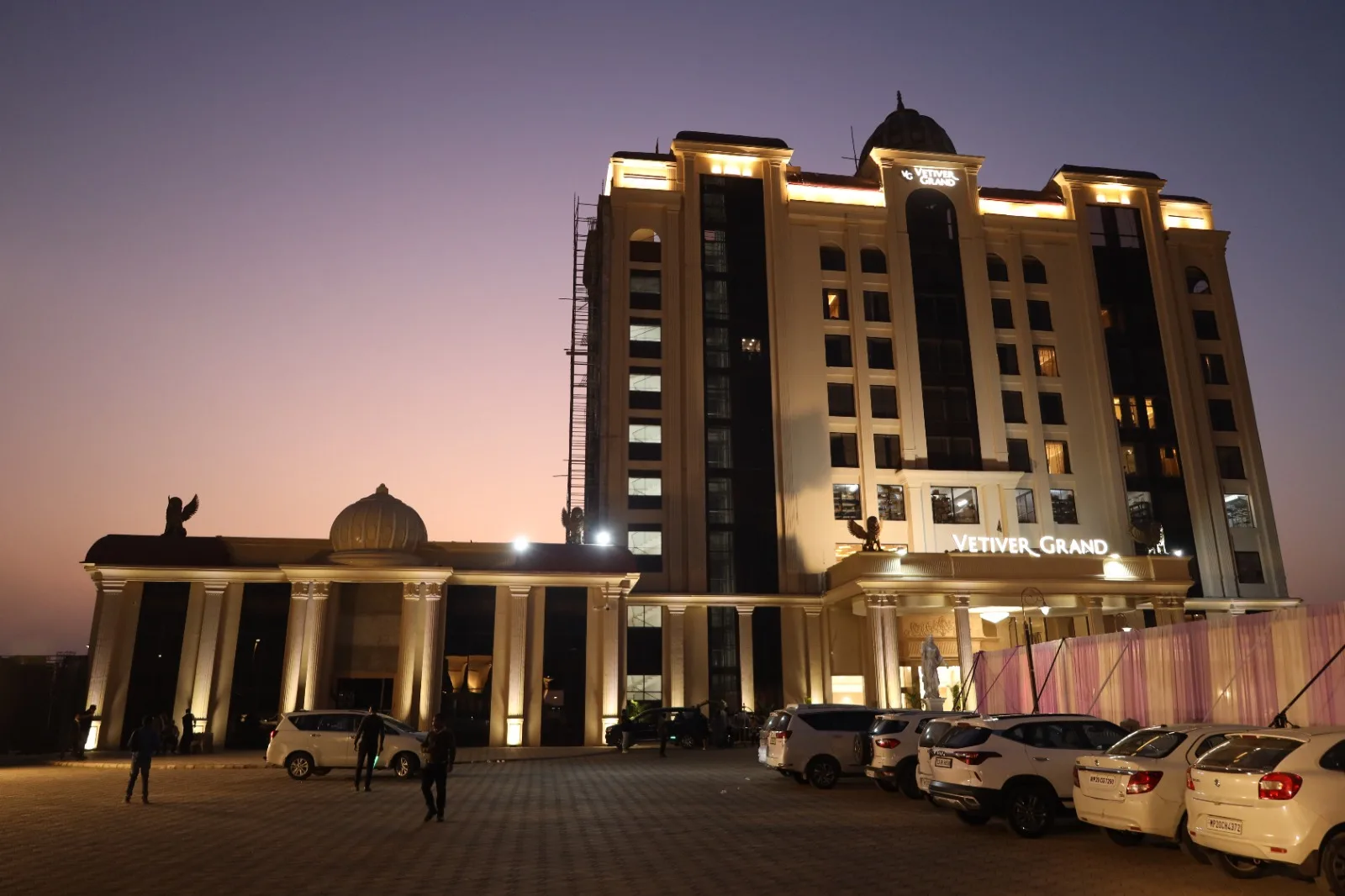
If you are planning a destination wedding in Madhya Pradesh, Jabalpur deserves a serious look, and the reason is logistics as much as romance. The city has its own commercial airport, Dumna (JLR), with direct IndiGo flights to Delhi, Mumbai, Bengaluru, Hyderabad and Indore, so relatives fly in without a connection. Its winter runs cool and dry, ideal for outdoor functions from October through March. And on a single estate like Vetiver Grand, five banquet halls, four lawns, 90 rooms and an in-house pure-vegetarian kitchen sit under one roof, which means a full multi-day wedding, from mehndi to reception, happens in one place instead of across a fleet of vans.
That combination (reachable, seasonal, and self-contained) is what makes central India quietly one of the country's most sensible places to marry.
Why central India is the quiet frontier for destination weddings
Most destination-wedding conversations in India default to the same three or four places: a palace in Rajasthan, a beach in Goa, a backwater in Kerala, a hill station up north. They are beautiful, expensive, and by now crowded: with weddings, with tourists, and with the price inflation that follows popularity.
Central India has stayed under the radar, and Jabalpur is its most usable base. What it offers is space, value and a genuine sense of arrival for guests who have never seen this part of the country: the Narmada river, marble gorges, and an unhurried pace big-city weekends have forgotten.
Getting everyone there: Jabalpur's Dumna Airport
The single biggest failure point of a destination wedding is travel. Guests who cannot reach the venue easily arrive exhausted and late, or do not come at all. Jabalpur solves this better than most emerging destinations because it has scheduled air service, not just a road or a rail line.
Direct IndiGo flights connect Jabalpur with five of India's major hubs: Delhi (DEL), Indore (IDR), Mumbai (BOM), Hyderabad (HYD) and Bengaluru (BLR).
Routes per FlightConnections and IndiGo's Jabalpur airport directory, checked July 2026; always confirm live schedules and exact flight duration when you book.
For guests routing through other cities, one connection through Delhi, Mumbai or Hyderabad reaches almost anywhere. Rail adds a second layer (Jabalpur is a major junction on the central network), and for regional guests, the road in is straightforward. Practically, that means you can invite family from four corners of the country and reasonably expect them to make it.
The winter-wedding window (October–March)
Central Madhya Pradesh has three distinct seasons: a hot summer, a monsoon, and a cool, dry winter. For a wedding, winter is the answer. From roughly October to March the evenings turn crisp, the days are bright, and outdoor functions on the lawns run comfortably late without heat or rain to fight.
This is not a coincidence of climate alone. India's auspicious marriage dates (shubh vivah muhurats) cluster heavily in exactly this window: November and December, then again from late winter into spring. Demand for good venues on the best dates is real and concentrated, which is the practical reason to plan early. If you are working backward from a specific muhurat, our guide to auspicious wedding dates for 2026–27 lays out the verified dates alongside a caveat to confirm timings with your own priest.
What a single-estate destination wedding actually solves
The appeal of a destination wedding is everyone in one place for a few days. The frustration is when "one place" turns out to be a hotel for sleeping, a separate lawn for the sangeet, a banquet hall across town for the reception, and a caravan of cars ferrying a tired family between them.
A single estate removes that friction. When the ceremony spaces, the guest rooms and the kitchen belong to one property, the wedding stops being a logistics exercise and becomes a celebration people can relax into.
Halls, lawns, rooms and dining on one estate
Vetiver Grand was built around exactly this idea. The venue inventory spans intimate indoor halls to a lawn large enough for a full baraat and a thousand-guest reception:
| Space | Type | Size |
|---|---|---|
| Imperial | Banquet hall | 10,000 sq ft |
| Regal | Banquet hall | 2,200 sq ft |
| Monarch | Banquet hall | 1,700 sq ft |
| Crown | Banquet hall | 1,600 sq ft |
| Royal | Banquet hall | 1,500 sq ft |
| Royale | Outdoor lawn | 35,000 sq ft |
| Elite | Outdoor lawn | 20,000 sq ft |
| Premier | Outdoor lawn | 18,000 sq ft |
| Garden | Outdoor lawn | 12,000 sq ft |
Those are the property's own measured dimensions. Guest capacity is a separate calculation that depends on your seating style, stage, dance floor and buffet layout. As a rough guide, a seated dinner needs roughly 12–15 sq ft per guest and a floating reception 8–10, so a 10,000 sq ft hall comfortably hosts several hundred, and the large lawns run well into four figures. We work those numbers honestly in the banquet-hall sizing guide; treat any single figure as a planning estimate and confirm exact seating with the events team.
For accommodation, the estate holds 90 keys (85 rooms and 5 suites across nine floors), enough to house the wedding party and immediate family on-site, with the rest of the guest list in nearby city hotels a short drive away. Between functions, the rooftop infinity pool and its party deck give younger guests and out-of-town cousins somewhere to gather, and every plate served, from the welcome breakfast to the reception buffet, comes from the in-house pure-vegetarian restaurant, Kasturi, so catering is not an outside variable you have to manage. (Drinks lean on Kasturi's mocktail list: think a Paan Mojito at the sangeet.)
A gorge made for the pre-wedding shoot
One thing Jabalpur has that a hotel ballroom never will: Bhedaghat. About 25 km from the city, the Narmada narrows here into a gorge of hundred-foot marble cliffs, best seen from a rowboat drifting between the walls. In winter light, and on a full-moon night when boats run late, it is one of the more genuinely cinematic settings in India for a pre-wedding shoot, and it costs a fraction of what a permit at a heritage fort would. Downstream, the Dhuandhar Falls throw up their permanent cloud of spray. It is an hour of your morning for photographs no ballroom backdrop can match, and then you are back on the estate for the day's functions.
Building the multi-day flow
A destination wedding is really a three-to-four-day event, and the pleasure of a single estate is that the whole arc plays out without anyone leaving. A typical flow:
- Day 1: Arrival & mehndi. Guests land through the day; a relaxed mehndi and lunch on one of the smaller lawns or in an indoor hall sets the tone. Rooms are ready, luggage handled, no one is driving anywhere.
- Day 2: Haldi & sangeet. A daytime haldi by the pool deck, then the sangeet, the night the estate's lighting, sound and lawn space really earn their keep. A large open lawn like Royale or Elite absorbs a full dance floor, stage and seating without feeling tight.
- Day 3: The wedding. Baraat, mandap and pheras. An outdoor lawn for the procession and ceremony, or the Imperial hall if the weather or the hour calls for it.
- Day 4: Reception & farewell. The formal reception in the largest suitable space, then a farewell brunch before departures.
Because every space is on the same grounds, the transitions are minutes, not motorcades, and the couple's families spend the days with their guests instead of coordinating them.
A realistic conversation about timeline and budget
Two honest points to plan around.
Timeline. For a peak winter date, especially the busy November and December muhurats, start ten to twelve months out. That is less about the venue running out of physical space and more about the best dates genuinely booking first; the calendar, not the square footage, is the constraint. Off-peak and shoulder dates give you far more flexibility if you have room to move.
Budget. A destination wedding in central India generally costs meaningfully less than the metro or palace-circuit equivalent, for two reasons: base costs (venue, catering, rooms) in Jabalpur sit below Delhi, Mumbai or a Rajasthan fort, and a single-estate wedding strips out the transport, coordination and duplicate-setup overhead that a multi-venue city wedding carries. We keep numbers directional on purpose, because the real figure depends on your guest count, your dates, and how elaborate you want the décor and dining, so the useful next step is a package scoped to your actual plan rather than a headline per-plate rate. If you are still comparing options, our guide to choosing a wedding venue in Jabalpur walks through the questions worth asking any venue before you sign.
When you are ready to talk specifics (dates, guest numbers, which spaces suit your functions), the fastest route is a direct conversation with our weddings team by call or WhatsApp. Central India has been the quiet option for long enough. For a wedding that is reachable, seasonal and genuinely under one roof, it is worth a much louder look.
FAQ
Asked at the desk
Where can you have a destination wedding in Madhya Pradesh? Jabalpur is one of the most practical bases in central Madhya Pradesh. It has a commercial airport (Dumna, code JLR) with direct IndiGo flights to Delhi, Mumbai, Bengaluru, Hyderabad and Indore, and single-estate venues like Vetiver Grand that combine five banquet halls, four lawns, 90 rooms and an in-house pure-vegetarian kitchen, so an entire multi-day wedding runs on one property.
Can I fit all my guests on one property in Jabalpur? At Vetiver Grand, 90 keys (85 rooms plus 5 suites across nine floors) let you block the core wedding party and close family on-site, with the city's other hotels absorbing the wider guest list a short drive away. The ceremony spaces range from the 1,500 sq ft Royal hall to the 35,000 sq ft Royale lawn, so the same estate scales from an intimate gathering to a large celebration.
What is the best season for a destination wedding in central India? October to March. Central Madhya Pradesh has hot summers and a monsoon, so the comfortable window for outdoor lawn functions and long evening receptions is the cool, dry winter, which is also when India's auspicious marriage dates cluster. Book 10–12 months ahead for peak November–December dates.
Is a destination wedding in central India cheaper than in a metro? Generally, yes. Venue, catering and room costs in Jabalpur run well below Delhi, Mumbai or a Rajasthan palace circuit, and hosting everything on a single estate removes the transport and logistics overhead of a multi-venue metro wedding. Treat any figure as directional and confirm a package scoped to your guest count and dates with the events team.